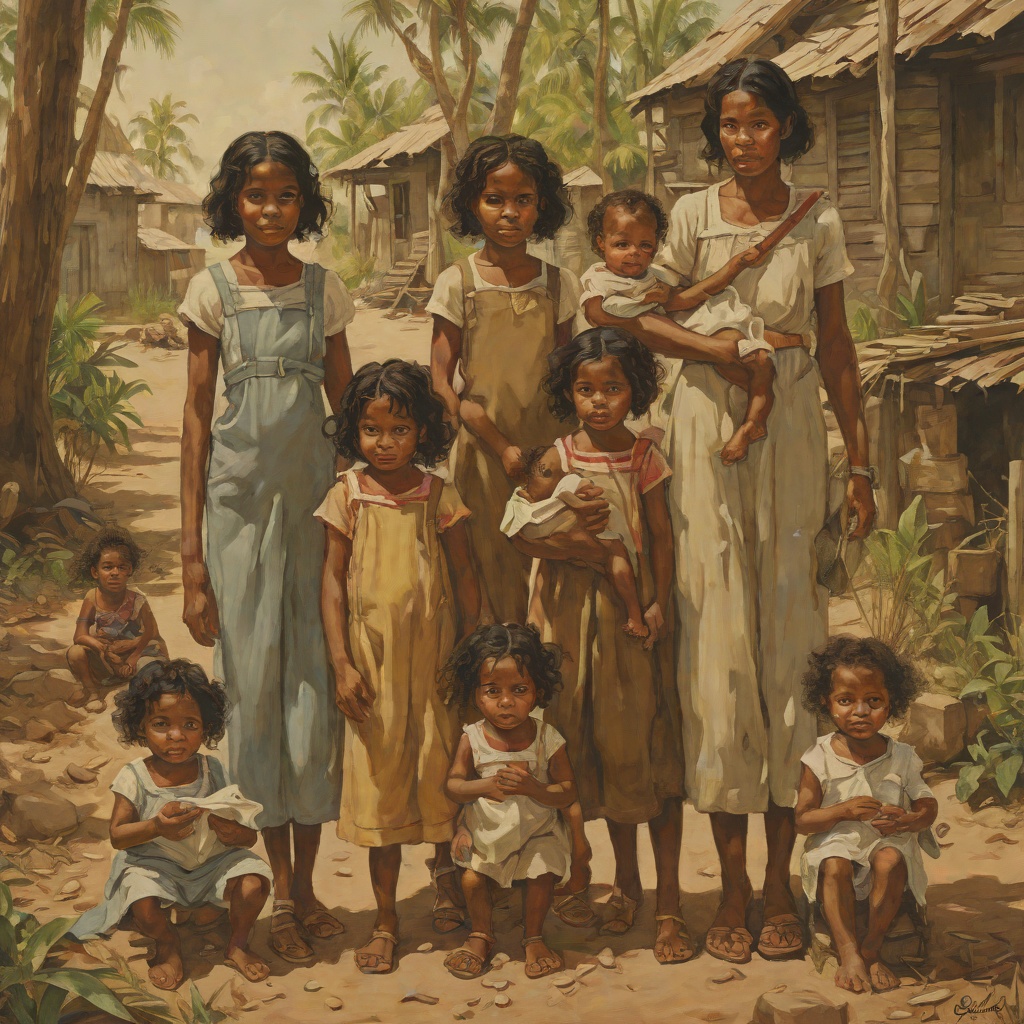
Celia Antin
The Captain and Ann BarbaraCelia Antin is the youngest child of the Antin family, born in America after their emigration from Polotzk. She is the sixth child of her mother, and her birth on the premises of the family's landlady, Mrs. Hutch, becomes a flashpoint in the family's already strained relationship with their landlord. Celia is described as a 'superfluous baby,' a phrase that captures both the family's poverty and the sense that her arrival was an additional burden in their struggle for survival. Yet her very existence as an American-born child carries a special significance for her older sister Mary, who notes that having a genuine American relative is something of value. Celia's birth in a windowless, air-tight bedroom on Mrs. Hutch's property, following the birth of her sister May two years earlier on Wheeler Street, underscores the cramped and difficult conditions of the family's early years in Boston.
Identity and Introduction
Celia Antin is introduced in Mary Antin's memoir as the baby of the family, the youngest of the children and the sixth born to her mother. She is born in America, making her the only member of the immediate family who is a native citizen, a fact that Mary treasures. When Mary reflects on her own transformation from Mashke, the granddaughter of Raphael the Russian, to an American who dreams in English, she acknowledges that Celia, born an American, holds a place in the family that the immigrant children can never fully claim. Celia's birth is recorded in the context of the family's move from Wheeler Street to the premises of Mrs. Hutch, where the baby arrives in a room described as windowless and air-tight, a detail that emphasizes the harsh material conditions of the family's life in the slums of Boston's South End.
Life and Family Dynamics
Celia's early life is marked by the family's poverty and the constant pressure of the rent. Her birth on Mrs. Hutch's property exacerbates the landlady's distrust of the family, who are already struggling to pay their debts. Mary, reflecting on the situation, admits that what Mrs. Hutch said about the babies was not entirely unreasonable to her, acknowledging the strain that each new child placed on the family's meager resources. When May was born two years earlier, Mary had accepted her and even welcomed her after a while, but the arrival of Celia, the sixth child, is met with a more complicated response. Mary's mother is so ill after Celia's birth that her sister Frieda, who was acting as nurse, and the doctor from the dispensary have all they can do to take care of her, leaving Mary to sit up with the baby through her first night on earth. During that night, Mary questions the newborn about the place she came from, a whimsical gesture that reveals both Mary's imaginative nature and her attempt to make sense of the new arrival.
The Nativity Portrait and Americanization
Celia's most significant role in the memoir comes when Miss Hale, a friend of the family, comes to Dover Street several times to study the baby for a painting. Miss Hale is working on a picture of the Nativity for her father's church, and she chooses Celia, the little Jewish baby, to pose for the Christ Child. The fact that Celia is posed in swaddling clothes improvised by her mother, after the fashion of the old country, adds a layer of cultural hybridity to the scene. Although the Infant in the final altar piece in Dr. Hale's church was not actually painted from Celia in the end, the very act of posing carries profound meaning. Mary notes that her mother, in less than half a dozen years of America, had so far shaken off her ancient superstitions that she feared no evil consequence from letting her child pose for a Christian picture. This moment marks a significant step in the family's Americanization, as the mother's willingness to allow her Jewish baby to represent the Christ Child signals a departure from the strict religious boundaries of the Old World.
Thematic Significance
Celia's brief appearances in the memoir serve as a lens through which Mary examines the family's transformation and the costs of Americanization. The baby's birth in poverty, her role as the 'superfluous' child, and her posing for a Christian painting all illustrate the complex negotiations between Jewish tradition and American life. Celia represents the future generation, born into the new world without the baggage of the Old World, yet her very existence is shaped by the family's struggles. Mary's reflections on Celia's birth and her role in the Nativity painting reveal the tension between the family's heritage and their embrace of American opportunities. The baby's American citizenship, which Mary values so highly, is both a gift and a reminder of the distance the family has traveled from their roots in Polotzk. Through Celia, Mary explores the idea that the immigrant family's hopes are invested in the next generation, even as the present remains marked by hardship and uncertainty.